User:Dakoder
%;******************************************************************************* %;* Last edited date: 1st June 2016 Ver 1.0 %;* langtons_ant_3.m …

Octave Script
%;*******************************************************************************
%;*       Last edited date: 1st June 2016 Ver 1.0
%;*       langtons_ant_3.m
%;*       m-file for langtons ant (closed form)
%;*
%;*       Written by: Graham Medland
%;*       gmail.com: graham.medland@
%;*******************************************************************************
clear
E=100              % Size of lattice.
N=11200         % Number of iterations.
z(1:1:E^2)=-1;
k(1:1:E^2)=0;
k(1)=(E^2+E)/2;
for t=1:1:N;
k(t+1)=mod(k(t)+real(round((0.5*(E+1)*exp(i*pi/4*(trace(diag(z))-E^2)))-(0.5*(E-1)*exp(-i*pi/4*(trace(diag(z))-E^2)))))+imag(round((0.5*(E+1)*exp(i*pi/4*(trace(diag(z))-E^2)))-(0.5*(E-1)*exp(-i*pi/4*(trace(diag(z))-E^2))))),E^2);
z(k(t+1)+1)=real(exp(2*i*pi/4*(1+z(k(t+1)+1))));
endfor;

imagesc(reshape(z,E,E))
disp("\n      Langtons Ant characteristic equation Delta_k \n      By Graham Medland )")
Copy and paste into octave-online to see Langtons ant.
Wave equation

Mapping the ant world to a one dimensional flat torus or manifold using Eulers identity,


This can now be recast using partial fractions into the form.

With variables.
- this represents the orthogonal changes in direction (Electric / Magnetic field lines).
- and be the complex conjugates of and
- and where the length of one side of the lattice.
- and is the basis vector for the z axis, the same principle applies to the other two axis.


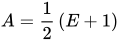
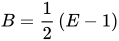


We create the complex oscillator (which gives rise to the discrete rotations) where.
- and.

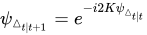
Now we create the rotate equation, using the sum over all paths integral, see Feynman chessboard since the ant visits all of the squares over time.
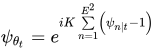
Noting that
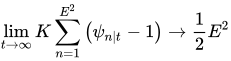
And since the continuum is elliptical we need two of these functions

Now we make the Quantum rotor equations


These rotors (torsion based spinor's) when combined expand to form,


This then becomes a superposition of both rotors where in the limit as t tends to infinity we get an equal spread of both functions. At the start of the iteration process, after four iterations of we get which represents a step change in direction of phase, after another four iterations of we get back to , these 8 steps are represented by a simple sum,


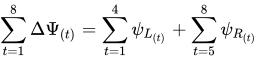
Thus in its native state as a 2x2 SU2 Special Unitary Matrix, we have
- and


The Langtons ant Binary matrix becomes an oscillating spinor (a model for a single subatomic particle), with the matrix increased in size we start to see a complex chaotic system which now models an ensemble of particles (a model for the Higgs field interaction).

Quadratic form
- Starting with a quadratic equation with and forming the eigen wave functions (roots of the quadratic), expanding, we get
- Ths simplifies to




Therefore the Langtons ant wave equation can be expressed as a quadratic equation.

As an SHM equation we can remove , rearange to form the 'langtons ant wave equation'.

Thermodynamics
The super attractor of the bounded wave equation (Langtons ant) produces a Gaussian distributed system, where at the start of the algorithm there is a low value of entropy (since all squares are the same colour) after several million iterations half of the squares are now black and the other half are white and the ant reaches a steady state.
References
Category:Thermodynamics Category:Chaos theory Category:Equations Category:Spin models
Content Disclaimer
Informasi ini disarikan dari Wikipedia dan disajikan kembali untuk tujuan edukasi. Konten tersedia di bawah lisensi CC BY-SA 3.0. Kami tidak bertanggung jawab atas ketidakakuratan data yang bersumber dari kontribusi publik tersebut.
- The information displayed on this website is sourced in part or in whole from Wikipedia and has been adapted for the purpose of restating it. We strive to provide accurate and relevant information, however:
- There is no guarantee of absolute accuracy. Wikipedia is an open, collaborative project that can be edited by anyone, so information is subject to change.
- It is not intended to constitute professional advice. The content displayed is for informational and educational purposes only. For important decisions (e.g., medical, legal, or financial), please consult a professional.
- Content copyright. Wikipedia is licensed under the Creative Commons Attribution-ShareAlike License (CC BY-SA). This means that content may be reused with appropriate attribution and shared under a similar license.
- Responsible use. Any risk arising from the use of information from this website is entirely the responsibility of the user.